
Quick answer
Neither platform is universally better. Google Search is strongest at capturing people already searching for concrete coating services, while Meta can create demand through visual before-and-after advertising. Many coating businesses benefit from using both once their website, tracking and follow-up systems are ready, as long as each platform is measured on its own.
Catching demand vs creating it
Google Search shows your ad to someone who typed a coating-related search. They already want the result. Meta shows your ad to someone scrolling who was not thinking about their garage until they saw yours.
| Google Search | Meta / Facebook | |
|---|---|---|
| Buyer intent | Already looking | Not looking yet |
| Typical strength | High-intent calls and forms | Visual demand, lower cost per lead |
| Creative | Text ads and assets | Before-and-after photos, video |
| Main risk | Junk searches, homepage traffic | Low-intent leads, slow follow-up |
| Judge it by | Qualified calls, estimates, jobs | Estimates booked, jobs won |
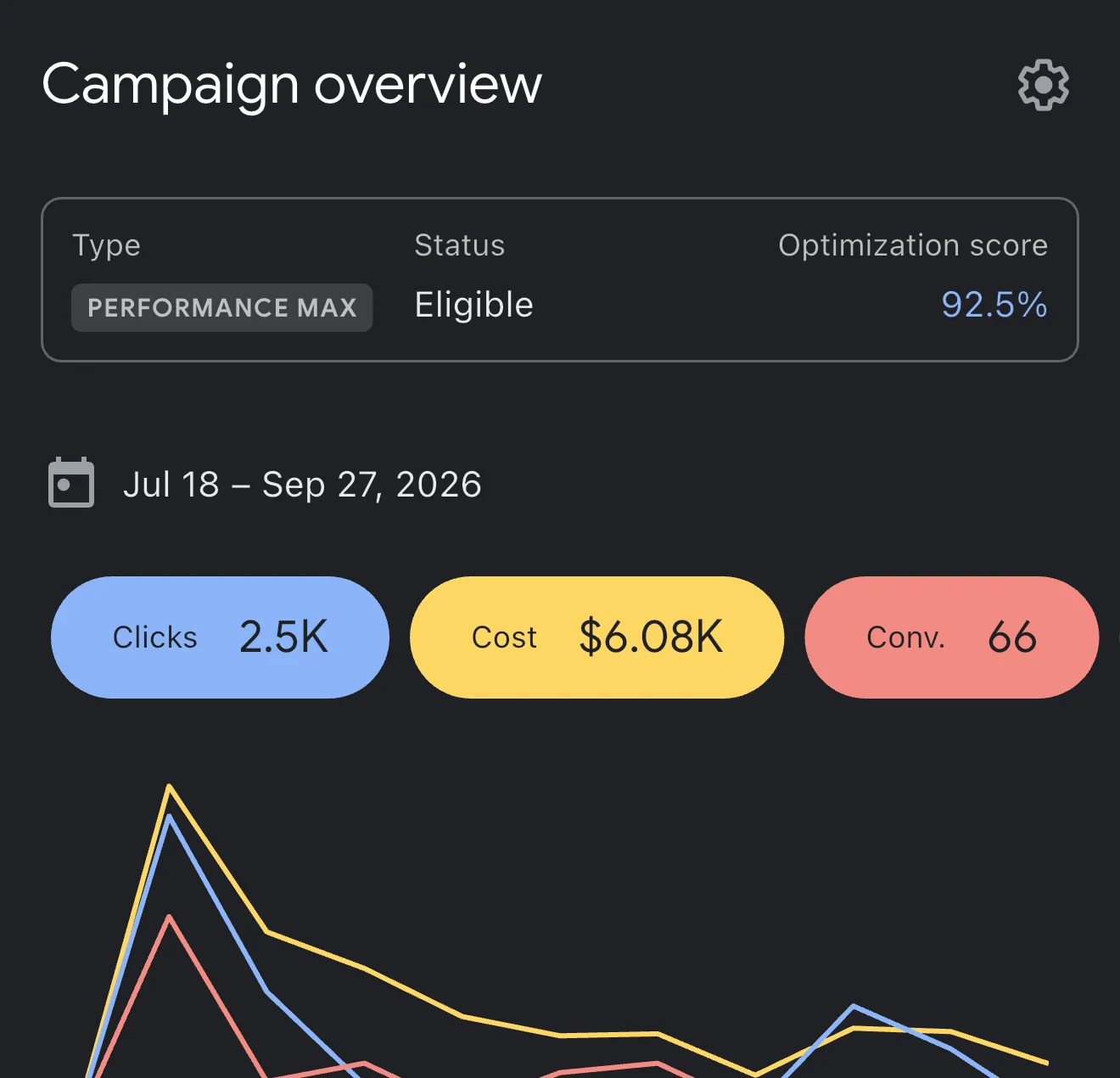
What Google Ads produced for one coating company
The Performance Max and Search campaigns are separate and their figures are never added together. Recorded conversions are counted by Google Ads conversion actions, which are not the same thing as leads or jobs.
What Meta produced for the same company
Meta produced a lower calculated cost per lead, which is typical of a demand-creation channel. That does not make it the better channel; it means its leads need a different follow-up process.
Why the numbers are never added together
Reported independently
Meta and Google results are reported independently because the advertising platforms use different attribution methodologies.
A homeowner can see a Meta ad on Monday, search your name on Thursday and click a Google ad. Both platforms may count that one person. Adding the totals creates a number that never existed. The reporting periods in this example also overlap.
The honest tie-breaker is a lead record that stores its own source. See how to know which channel produced a lead.
Want to know what your market supports?
Which to start with
For most coating contractors, start with Google Search once the website and tracking are ready. It produces higher-intent leads while you build reviews and organic visibility. Add Meta when your follow-up process can handle more, earlier-stage leads.
- Start with Google if you need calls from people ready to buy.
- Add Meta if you have strong before-and-after photos and capacity to follow up persistently.
- Run both when each has its own landing pages, tracking and reporting.
Track both to the outcome
Whichever platform you use, judge it on booked estimates and won jobs. That requires tracking calls and forms at the source and following each lead through your pipeline.
For budgets: Google ad spend starts at $1,000/month with us, and management is $1,500/month up to $5,000 in spend. Details are on the pricing page.
Common questions
Is Google Ads or Facebook Ads better for concrete coating contractors?
Neither platform is universally better. Google Search is strongest at capturing people already searching for concrete coating services, while Meta can create demand through visual before-and-after advertising. Many coating businesses benefit from using both once their website, tracking and follow-up systems are ready.
Full answerShould concrete coating companies use Google Ads and Facebook Ads together?
Often yes, once the foundation is ready. Google captures people already searching; Meta reaches homeowners before they search and keeps your work in front of them. Running both works best when each has its own landing pages, tracking and follow-up, and when results are measured separately instead of being added into one blended number.
Full answerWhat is lead attribution?
Lead attribution is the process of identifying which marketing channel, campaign or page deserves credit for a lead. It matters because budget should move toward what produces jobs. Different platforms use different attribution rules and time windows, so the same customer can be counted by Google and Meta at once, which is why platform totals should not be added together.
Full answerWhy am I getting bad leads from Google Ads?
Bad Google Ads leads usually come from loose keyword matching without ongoing search-query management, geographic targeting that reaches outside your service area, traffic sent to a generic homepage, and conversion tracking that counts junk as success. Fixing targeting, filtering and tracking usually improves lead quality more than raising the budget.
Full answer

About the author
Logen Doiel · Founder, Polyurea Marketing
Logen Doiel founded Polyurea Marketing to give concrete coating contractors one connected customer-acquisition system instead of a pile of disconnected vendors. He builds and manages the websites, Google Ads, organic search and lead tracking behind the ArmorShield Concrete Coatings case study. Polyurea Marketing is a specialized brand of Tech Turtle Marketing LLC.
More about Logen